Five Environmentally Sensitive Lands Recommended for Polk County Conservation.

Five Environmentally Sensitive Lands Recommended for Polk County Conservation.

On November 7th, the citizens advisory committee, Conservation Land Acquisition Selection Advisory  (CLASAC) Committee, recommended that five nominated lands be considered for conservation acquisition, and will move forward for county commissioner approval. 

The CLASAC committee is responsible for evaluating applications from willing land owners who wish to have their property considered for acquisition.  The properties are evaluated and scored based on five criteria: water resources, natural communities and landscapes, plants and animals, human value and management.

The county has begun receiving funding from the new Environmental Lands Program property tax that voters approved in 2022.  This will give county officials authority to begin making acquisitions based on anticipated revenue.

These five properties range in size from 148 acres to 1,313 acres, with varying landscapes of upland sandy scrubs, hardwood hammocks, pastures, marshes, wetlands and citrus groves.

1)     Creek Legacy Ranch, a 1,313 acre ranch that borders Lake Hatchineha and the headwaters to The Everglades.  This area faces heavy development pressure as new and proposed housing projects are emerging, making the protection of this property more urgent than ever.

Creek Legacy Ranch has substantial conservation value, specie and habitat diversity, and is a critical connector of the Florida Wildlife Corridor.  Protecting this connection  of the corridor is vital, as it provides a north to south migration path needed for large mammals such as the Florida panther and black

2)  Friedlander Ranch is 649 acres in Lake Wales, and scored high for it’s natural communities and landscapes containing diverse ecosystems of old oak hammocks, wetlands and dry habitats.  This property has a high value for water recharge to the Floridan Aquifer.

This property is in a key location because it runs adjacent to Tiger Creek Preserve and a mitigation area which gives it a natural connectivity to it’s surrounding areas.

This property is home to hooping cranes (a federally listed endangered species), crested caracara, fox squirrels, gopher tortoises, and the rare ziziphus plant found only in Polk and Highlands Counties.


3)  Raley Groves is 418 acres near Lake Annie in Dundee includes citrus groves, pasture land and a six year old breeding population of turkeys.  This property contains sandy soils and has important water recharge and resource value.  It is on the Lake Wales Ridge and is adjacent to a Peace Creek canal restoration area.


4) The Astute Financial Conservation Trust property is 148 acres located east of Winter Haven Regional Airport.  The water resources are of great importance as it is one of the last large remaining wetlands connected to the Winter Haven Chain of Lakes. 

5) The Fulton Scrub is 238-acres located in Alturas. This cattle property has a very high quality scrub containing many rare and listed species, including sand skinks.  Five federally listed endangered and endemic plants were documented, Florida Bonamia, Florida Jointweed, Paper Nailwort, Small’s Jointweed, and Showy Dawn Flower.  

Once the lands are approved by the county commissioners, the next stage of the process is for the county to pursue collaboration of funding options and potential partnerships.  Offers of out right purchase (fee simple) or a conservation easement (less than fee) can then be made to the land owner.  It can take at least six months before the county makes an offer to property owners.

Property owners wishing to have sites evaluated may submit a nomination form, which can be found at   
https://polknature.com/about-us.                              

Contact Tabitha Biehl at tabithabiehl@polk-county.net for more information.

Polk Proposes New Development Review Scheme That Will Bypass Public Involvement, Add higher Voluntary Standards

Polk Proposes New Development Review Scheme That Will Bypass Public Involvement, Add Higher Voluntary Standards

Posted on October 29, 2023 by Tom Palmer

Polk County planners, at the encouragement of the County Commission, have come up with a cure for long Planning Commission agendas.

Their prescription, if approved by the Planning Commission and the County Commission, will mean that in some cases developers will no longer be plagued by having to sit through hearings and having to listen to complaints by the pesky public about the demerits of their projects.

Instead, all they will need is a favorable staff review that will occur without public notice.

But in exchange developers will have to add more sidewalks and park space, not cram their units so close together and plant some trees along the edge of the subdivision if their project is twice as dense as the one next door.

The effort, called prescriptive planned developments, will undergo its first public hearing Nov. 1 before the Polk County Planning Commission.

This approach raises some questions.

First is that planned developments or planned-unit developments as they were called when the idea emerged 40 years or so ago around here, was an attempt to push the envelope of the restrictions in existing zoning regulations by agreeing to additional conditions, This proposal expands that idea.
It will apply only in mapped Urban Growth and Utility Enclave areas, though the boundaries of those areas have a way of expanding unexpectedly or as the staff report puts it “Much of the UGAs and UEAs are not completely formed.”

Although it is billed as an “objective” approach to development review, it is based on the assumption that if the area is mapped within something called the Transit-Supportive Development Area– most of the areas along main thoroughfares outside cities—the development site has adequate infrastructure– at least when it comes to water and sewer service– for the addition of subdivisions containing up to 15 new homes per acre.

The ordinance is carefully worded to omit mention of other infrastructure deficits. If the stealth approval of new residential subdivisions means your kids are going to more overcrowded schools or your daily commute takes longer, this new ordinance is technically not to blame.
That’s because the Florida Legislature in cooperation with the development industry and the last two development-friendly governors did away with the state growth law requiring roads and schools to keep up with growth years ago and limited citizens’ rights to complain about it in court.
This is definitely part of a growing trend to grease the skids for development reviews by county planners whose staff reports—at least in Polk County– typically go out of their way to tout the advantages of any development that comes before them anyway.

Because of some restrictions imposed this year by the developer-controlled Florida Legislature, this ordinance will be available only to developers who voluntarily agree to abide by it. It also probably will be limited to developers who can justify their business decisions by being able to market to higher-end homebuyers willing to pay for the additional amenities. Affordable housing will occur elsewhere.

The proposed ordinance will expire at the end of 2024 unless the County Commission is happy with how it worked out.

In the meantime, you might want to watch and see how this works out in your neighborhood.
If you are unhappy, show up in Bartow and tell commissioners what you think.

Lakeland Highlands Scrub

Lakeland Highlands Scrub Preserve

Located in the southern region of Lakeland, the Lakeland Highlands Scrub stands as one of the few remaining undeveloped scrub habitats within the Lakeland Ridge. Similar to the Lake Wales Ridge, this ridge was created through the accumulation of sand during periods of changing sea levels millions of years ago when most of Florida was submerged in water. Today, these ridges exist as sandy islands confined by land, in contrast to their state 25 million years ago when they were surrounded by water.

This property showcases various natural communities, such as xeric hammock, scrubs, and scrubby flatwoods. As you venture into the preserve through the Shady Oak trail, you’ll notice an oak scrub characterized by the presence of highly contorted oak trees, indicating the effects of drought stress. The trail offers a wide, unobstructed path, largely devoid of vegetation because of the ample shade cast by the oak trees. In this environment, you can encounter various amphibians, such as the oak toad and the pinewood treefrog, as well as reptiles, including the yellow rat snake and the tiny ground skink. Decomposing trees offer plentiful habitat for insects and fungi to thrive, with a rapid colonization, especially following periods of rain. Additionally, you can spot Saw Palmettos, American Beautyberry, and Muscadine grapes distributed across the region.

As you reach the end of the Shady Oak trail, you’ll encounter the Lichen Loop trail, an area predominantly characterized by dwarf live oaks, sand live oaks, and Chapman oaks, with the ground adorned by an abundance of mosses and lichens. This environment provides an excellent opportunity to observe some of the common year-round birds, such as the Carolina Wren, White-eyed vireo, Northern mockingbird, and Northern Cardinal. Later in the autumn, you’ll also witness the presence of migratory species like the Blue-gray Gnatcatcher, Black & White warbler, Eastern Phoebe and Gray Catbird.

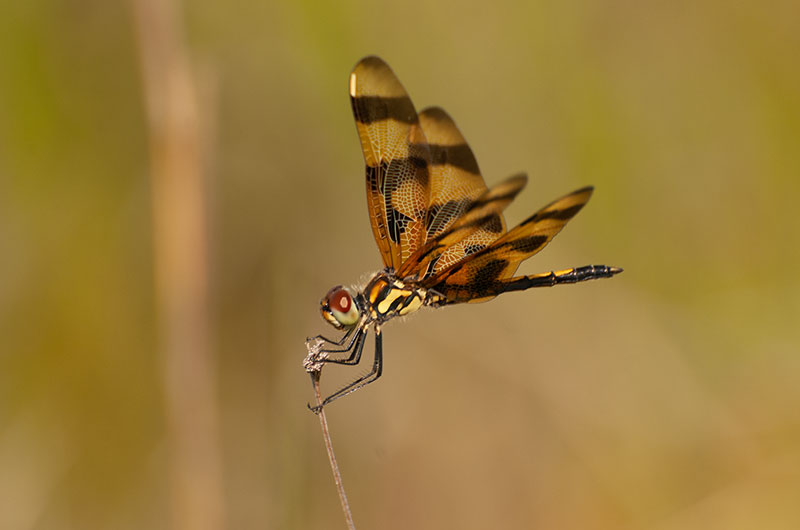
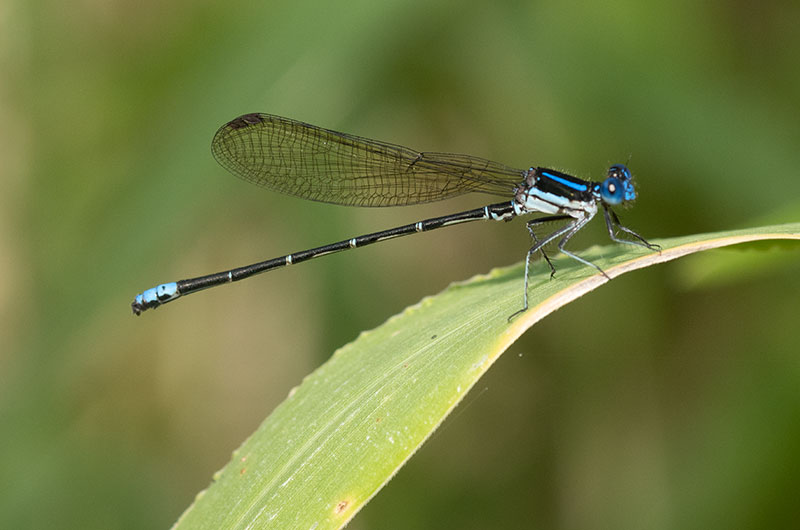
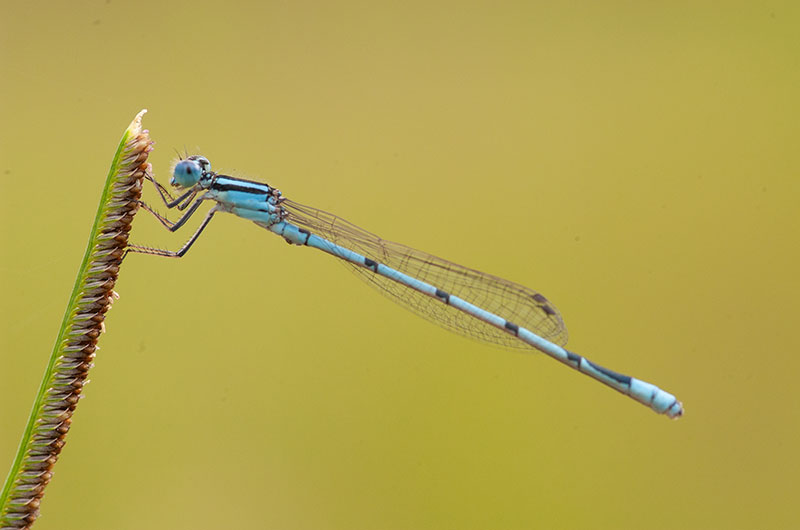
To the west, a boardwalk extends through an ephemeral wetland, a very important water source for wildlife. These wetlands are vital breeding grounds for both insects and amphibians. Larval stages of damselflies and dragonflies, as well as frog tadpoles, rely on the presence of water free from predators to complete their journey to adulthood. If the hydroperiod, or the duration of water presence, persists for a long time, numerous water plants that had remained dormant in the dry substrate will start growing again. Throughout the year, you’ll come across common plant species like Spatterdock, Carolina Redroot, and water lilies thriving in the marsh, while seasonal plants like the Smooth Beggarticks beautify the marsh during the autumn season.

During the wet season, a variety of reptiles are drawn to the pond. You may come across Florida Red-bellied Turtles, Banded Watersnakes, and even alligators in the marsh when conditions are favorable. Additionally, several mammal species are attracted to the pond, including White-tailed Deer, Common Raccoons, Virginia Opossums, and occasionally, Bobcats. In the vicinity of the wetland, you can find amphibians such as the American Bullfrog, Leopard frog, Cricket Frog, Green treefrog, and the Little grass frog.

The boardwalk marks the beginning of the Tortoise Loop Trail, which leads you through open scrubland dominated by oaks, palmettos, grasses, and goldenrods. The terrain features open sandy patches where various species of flowering plants, many of which are unique to Central Florida Scrub, can be observed. This area is favored by reptiles like the Six-line Racerunner, Eastern Fence Lizard, and the Gopher Tortoise, which is perhaps the most iconic reptile species in the scrub. As a keystone species, the Gopher Tortoise, with its extensive burrow system, provides habitat for nearly 300 other animal species. Snakes like the Eastern Rattlesnake and the Coachwhip seek refuge in the burrows created by the Gopher Tortoise.

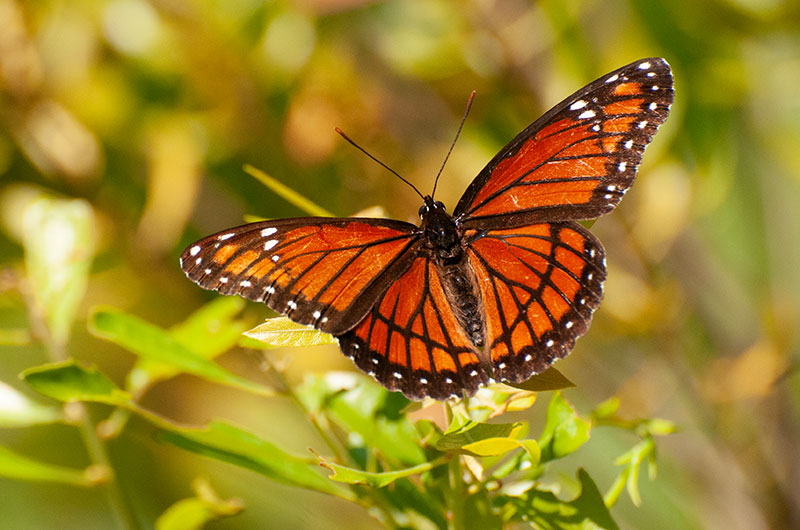
The Gopher Tortoise primarily feeds on a variety of plants, including the pads and fruits of the Prickly Pear Cactus. Along the trail, you’ll encounter numerous flowering plants, including the yellow blossoms of the Sandhill St. John’s-Wort, Coastal Plain Honeycombhead, and Slender Goldentop, interspersed with Shortleaf Gayfeathers and Blazing-Stars. These flowers attract various nectar-feeding insects, including several species of bees and butterflies. Predatory insects and arachnids can be observed in many of these flowering plants. Keep an eye out for Green Lynx, Jumping, and Crab Spiders within the yellow blooms. The preserve is home to over 20 species of spiders. Praying mantises can also be found, along with a variety of dragonflies.Similar to most scrub habitats, mammals are typically elusive during daylight hours, as they tend to conduct the majority of their foraging activities during the cooler nighttime hours. However, if you’re patient and observant, you can spot a wide array of other creatures that inhabit the Lakeland Highlands Scrub  during the day by paying attention to the smaller details.

Plants & Wildlife of Lakeland Highlands Scrub